Psychological Manipulation
Introduction
According to Christopher Shields, author of the Stanford Encyclopedia of Philosophy, the great psychologist Aristotle defined psychology as, "the behaviour of the human mind," (Shields 7). After much research of Aristotle, Shakespeare, and other famous psychologists, my connotation of psychological manipulation is defined as the act of planting ideas into an individual; making him or her believe anything. In Shakespeare's tragic play Othello, Iago psychologically manipulated Othello by convincing him that Desdemona was sleeping with Cassio. Iago was such a good manipulator because of his insights and knowledge about human nature. The fact that manipulators abused the flaws of their victims was portrayed throughout Othello, when Iago continued to expose Othello’s flaw, jealousy. “O beware, my lord, of jealousy! / It is the green-eyed monster, which doth mock / The meat it feeds on.” (Shakespeare, Act 3, Scene 3, 163-165).
How is it Done?
According to Dr. George K. Simon, “the art of
manipulation primarily involves two things: concealing aggressive intentions
and behaviours and knowing the psychological vulnerabilities of your opponent
well enough to know what tactics are likely to be the most effective weapons
against them.” (Simon 32). Iago was an
excellent manipulator as he took advantage of Roderigo’s gullibility, “Thus do
I ever make my fool my purse.” (Shakespeare, Act 1, Scene 3, 376). Iago also
took advantage of Othello’s lack of self esteem, “Haply for I am black / And
have not those soft parts of conversation / That clamberers have; or for I am
declined / Into the vale of years.”(Shakespeare, Act 3, Scene 3, 260-263). Iago
also knew that Cassio was reckless when he was drunk so Iago tried to provoke
Cassio by saying, “But one cup; I’ll drink for you.” (Shakespeare, Act 2, Scene
3, 34).

Connections to the World
Psychological manipulation is everywhere, Phillip Dick, a
novelist and a sociologist once said, “The basic tool for the manipulation of
reality is the manipulation of words. If you can control the meaning of words,
you can control the people who must use the words.” (Dick 1). What Dick said is very true; if we look back in time we
can see that Adolf Hitler, Mao Zedong, etc. all these people gained power through their manipulation of words. Psychological manipulation can come
in various forms, something as simple as a commercial could be considered as
manipulation. Commercials and advertisements are used to attract and manipulate
people into buying their product. Most people have never regarded advertisement
to be psychological manipulation because they associate it with criminals like
kidnappers. This is the reason why psychological manipulation is so slippery
and subtle; everyone is oblivious and no one suspects it. In Othello’s
situation, Desdemona never suspected that her husband had been psychologically
manipulated, she simply thought that he was having a bad day, “Something, sure,
of state, / Either from Venice, or some unhatched practice / Made demonstrable
here in Cyprus to him, / Hath puddled his clear spirit.” (Shakespeare, Act 3,
Scene 4, 132-135).

Connection to Self and Personal Response
I, like
Othello, have also been psychologically manipulated. Just yesterday, I was
watching television when I saw a commercial for a laptop. After that commercial
I told my parents that I wanted that laptop for Christmas. At that moment I
realized that I had been psychologically manipulated. I am generally a push
over and I am easily influenced by peer pressure which makes me a perfect
victim. Throughout my life I have constantly been manipulated, which is why I
am an expert at stopping and avoiding psychological manipulation. Manipulation
can be avoided by thinking consciously. Rollo May, a very creative and unique psychologist
wrote, “love and will are interdependent and belong together […] will without
love becomes manipulation […] Love without will in our own day becomes
sentimental and experimental.” (May 9). May is saying that if we do things
without a meaning than we are not really doing it for ourselves; this suggests
that we are being manipulated. Another important concept is that if we love
without thinking we are easily manipulated, but if we become too paranoid of
being manipulated then we will never love. At the end of the play, Othello said
something similar to Rollo May, “Of one that loved not wisely, but too well. Of
one not easily jealous, but being wrought.” (Shakespeare, Act 5, Scene 2,
360-361). Keep in mind that manipulators could be anyone, appearances can be
very deceiving. This does not mean that everyone is constantly trying to
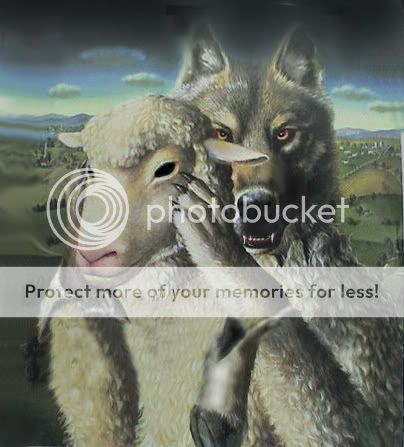
manipulate you. Just beware of the wolf in the sheep’s clothing.
Works Cited

